


Japanese Blade Maintenance: Japanese Knife Sharpening Techniques and Tips

Japanese knives are prized for their sharpness, precision, and craftsmanship. To keep them performing at their best, proper sharpening and maintenance are essential. I’ve spent years working with these blades and want to share straightforward techniques and tips to help you maintain your knives like a pro.
Understanding Japanese Blade Maintenance
Japanese knives differ from Western knives in several ways. They often have harder steel and a thinner edge, which means they can hold a sharper edge longer but require more careful sharpening. Maintaining these blades involves regular honing, proper sharpening, and careful handling.
Key points to remember:
Japanese knives usually have a single bevel or a very acute double bevel.
The steel is harder, so it can chip if sharpened incorrectly.
Sharpening angle is typically between 10 and 15 degrees per side, compared to 20 degrees for Western knives.
Proper maintenance extends the life of your knife and keeps it razor sharp for precise cuts.
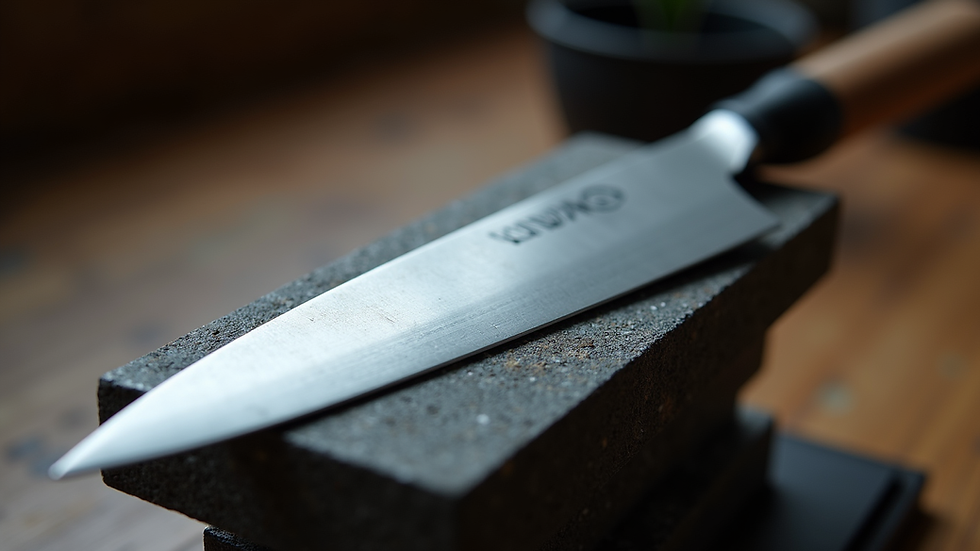
Essential Tools for Sharpening Japanese Knives
Before sharpening, you need the right tools. Here’s what I recommend:
Whetstones (Waterstones) - These are the best for Japanese knives. They come in different grits:
Coarse (200-600 grit) for repairing chips or very dull edges.
Medium (800-2000 grit) for regular sharpening.
Fine (3000-8000 grit) for polishing and refining the edge.
Honing Rod - Use a ceramic or fine steel honing rod to realign the edge between sharpenings.
Sharpening Guide (Optional) - Helps maintain a consistent angle if you’re new to sharpening.
Water and Towel - Keep your whetstones wet and your workspace clean.
Using the right tools ensures you don’t damage the blade and get the sharpest edge possible.
Step-by-Step Japanese Knife Sharpening Process
Sharpening a Japanese knife is a skill that improves with practice. Here’s a simple, step-by-step guide to get you started:
Step 1: Soak Your Whetstone
Soak your waterstone in water for 10-15 minutes before use. This prevents the stone from drying out and helps with smooth sharpening.
Step 2: Set the Sharpening Angle
Hold the knife at about 12 degrees to the stone. This angle is critical for Japanese knives and differs from Western knives.
Step 3: Start with the Coarse Grit
If your knife is dull or chipped, start with the coarse grit stone. Use smooth, even strokes, moving the blade across the stone from heel to tip. Apply light pressure and maintain the angle.
Step 4: Check for a Burr
After several strokes, check for a burr on the opposite side of the edge. The burr is a small, raised edge that indicates you’ve sharpened enough on one side.
Step 5: Switch Sides
Flip the knife and repeat the process on the other side until a burr forms there as well.
Step 6: Move to Medium and Fine Grits
Once the edge is shaped, move to medium grit to refine the edge, then to fine grit to polish it. Use the same angle and smooth strokes.
Step 7: Rinse and Dry
Rinse the blade and stone with water, then dry the knife thoroughly to prevent rust.
Step 8: Hone the Edge
Use a ceramic honing rod to realign the edge. Hold the knife at the same angle and gently run it along the rod a few times on each side.

Tips for Maintaining Your Japanese Knife Edge
Maintaining your knife between sharpenings is just as important as sharpening itself. Here are some tips I follow:
Use a Cutting Board: Always cut on wood or plastic boards. Avoid glass, stone, or metal surfaces.
Hand Wash Only: Never put your Japanese knives in the dishwasher. Hand wash and dry immediately.
Store Properly: Use a knife block, magnetic strip, or blade guard to protect the edge.
Regular Honing: Hone your knife regularly to keep the edge aligned and sharp.
Avoid Hard Foods: Be cautious cutting through bones or frozen foods, which can chip the edge.
If you’re unsure about sharpening your knife yourself, consider a professional japanese knife sharpening service to keep your blades in top condition.
When to Seek Professional Sharpening
Even with the best care, Japanese knives will eventually need professional sharpening. Here are signs it’s time to get expert help:
The blade is chipped or damaged.
The knife no longer holds an edge after home sharpening.
You don’t have the time or confidence to sharpen properly.
You want a perfectly polished edge for precision work.
Professional services use specialized equipment and techniques to restore your knife’s edge without risking damage.
Final Thoughts on Japanese Knife Care
Japanese knives are a joy to use when they are sharp and well-maintained. With the right tools, techniques, and care, you can keep your blades performing at their best for years. Remember to sharpen carefully, maintain the edge regularly, and seek professional help when needed.
Taking these steps will ensure your knives stay razor sharp and ready for any task.
Happy sharpening!


Comments